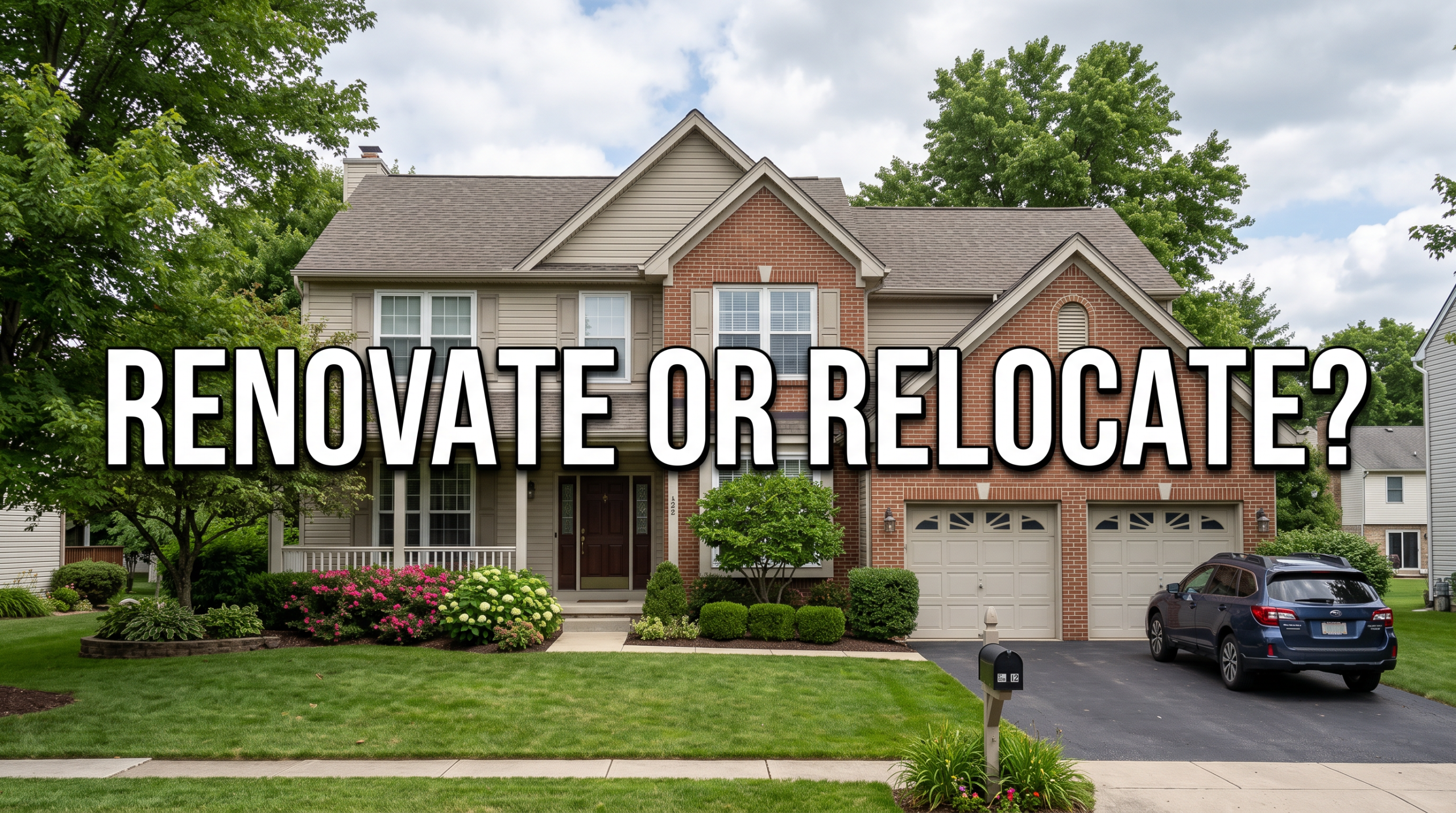
With mortgage rates still near 6.8% and more homes coming onto the market, many homeowners are facing an important question: Is it smarter to update the home you have or move into one that better matches your needs?
Remodeling can feel like the easier choice, especially if you enjoy your neighborhood and have built equity over time. But when you look beyond the emotional attachment, a move may sometimes offer the stronger financial and lifestyle outcome.
The Real Return on Renovations
Most home improvements should be viewed first as lifestyle investments—not guaranteed profit-makers.
Recent remodeling return-on-investment data indicates that many common renovation projects recover roughly 60% to 70% of their cost when the home is sold. Larger, highly customized projects often recover less. A luxury kitchen redesign, major bathroom reconfiguration, or substantial structural alteration may return closer to half of what was spent.
That does not mean renovations are always a poor decision. Updates can make a home more comfortable, functional, and enjoyable while you live there. But unless the project addresses a major issue—such as an outdated roof, insufficient bedrooms, a broken layout, or essential deferred maintenance—it is uncommon to recoup every dollar at resale.
Before committing to a large project, ask yourself whether you are improving the home for your own enjoyment or expecting the renovation to produce a substantial return later. Those are two very different goals.
Why Moving May Be Worth Considering
Moving comes with real costs, including closing expenses, moving costs, and potentially taking on a higher mortgage rate than your current loan. Still, a changing market can create opportunities that make relocating more appealing than it first appears.
- More available homes: Active inventory has risen significantly year over year, giving buyers a broader selection of homes, floor plans, neighborhoods, and price points to consider.
- Less intense competition: When more homes are available, buyers may have more time to compare options rather than rushing into a bidding war.
- Greater negotiating flexibility: Listings that stay on the market longer can create room to negotiate on price, repairs, credits, or other terms.
- Seller-paid incentives: Some sellers are increasingly open to concessions, including closing-cost credits and temporary or permanent mortgage-rate buydowns that can help reduce financing costs.
If your home has an awkward layout, lacks needed space, sits too far from work or family, or no longer supports your long-term plans, buying a home that already fits your lifestyle may be more practical than trying to force an older property to work.
A home with the right number of bedrooms, a functional floor plan, better outdoor space, or a more convenient location can provide more value over time than an expensive retrofit.
Questions to Ask Before Deciding
| Factor | Renovate | Relocate |
|---|---|---|
| Location and neighborhood | You love the community, schools, commute, and nearby amenities | You are interested in an area that better supports your current lifestyle |
| Scope of work | The home mainly needs paint, flooring, fixtures, landscaping, or other cosmetic improvements | The home requires a major addition, structural work, or a complete floor-plan overhaul |
| Budget and financing | You have cash available, usable equity, or favorable financing for improvements | You have sufficient purchasing power and may be able to negotiate seller incentives |
| Daily disruption | You are comfortable living through dust, noise, delays, and contractor schedules | You prefer a more turnkey home and a cleaner transition |
| Long-term fit | The home can realistically meet your needs after modest upgrades | Your needs have changed beyond what a remodel can reasonably solve |
| Potential resale appeal | Improvements will bring the home in line with comparable neighborhood properties | A different home may offer broader buyer appeal, better features, or a stronger location |
Make the Decision With Real Numbers
The choice between improving your current home and purchasing another one is not just emotional—it is a significant financial decision.
A well-planned “Move vs. Improve” analysis should compare:
- Your current home’s estimated market value and available equity
- The likely cost of renovations, including contingencies for unexpected expenses
- How much of the project cost you may recover at resale
- The projected value of your home after improvements
- Available homes that already meet your needs
- Estimated purchase costs, monthly payments, and potential seller concessions
- Your expected time horizon in the home
For some homeowners, staying and making targeted updates is the right move. For others, putting renovation dollars toward a home that already offers the desired layout, location, and lifestyle can be the more strategic choice.
Ready to explore your options? Reach out for a complimentary consultation to review your equity, compare the cost of renovating versus moving, and identify the opportunities available in your local market.
Want more help. Let us share our extensive experience with you.
RE# SP57698 | AB 57988
Silvercreek Realty Group
(208) 406-8424
chucklamb@chucklamb.com
renee.lambre@gmail.com
https://eagleidahohomesales.com/
https://realestateinstaridaho.com/
https://CheckLamb.com
https://linktr.ee/reneelamb

Leave a Reply