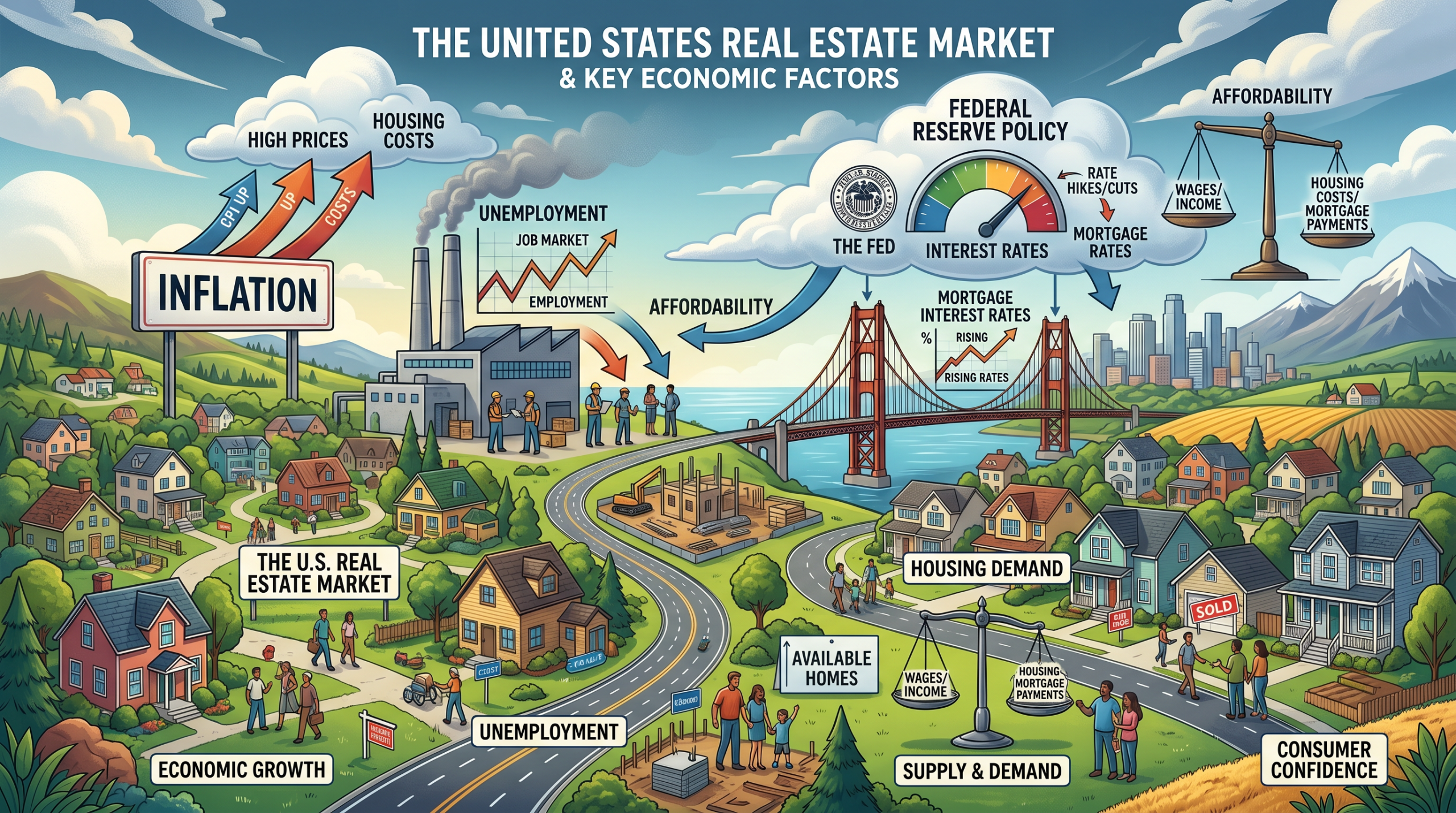
Several key factors consistently impact real estate activity across the country, including inflation, unemployment, Federal Reserve policy, and mortgage interest rates. Understanding how these economic forces work together can help buyers, sellers, and investors make better real estate decisions.
Inflation and the Cost of Housing
Inflation affects nearly every part of the economy, and housing is no exception. As the cost of goods and services rises, construction materials, labor, insurance, and property expenses also tend to increase.
Historically, real estate has often been viewed as a strong hedge against inflation because home values may rise over time. However, when inflation becomes too high, it can create affordability challenges for buyers and put pressure on the housing market.
Higher inflation also encourages the Federal Reserve to raise interest rates, which can slow housing activity and reduce purchasing power.
In Simple Terms:
- Rising inflation can increase home prices.
- Excessive inflation may slow the market by increasing borrowing costs.
Employment and Housing Demand
The strength of the job market is one of the clearest indicators of housing demand. When employment is strong and wages are growing, consumers typically feel more confident about purchasing homes.
Low unemployment often leads to:
- Increased buyer activity
- Higher consumer confidence
- Greater demand for housing
On the other hand, rising unemployment can create uncertainty in the market. During economic slowdowns or recessions, some buyers may delay purchasing decisions, leading to reduced demand and slower market activity.
Historically:
Periods of strong employment have generally supported healthier and more active real estate markets.
The Federal Reserve’s Influence on Real Estate
The Federal Reserve plays a major role in shaping the economy through interest rate policy. While the Fed does not directly set mortgage rates, its decisions strongly influence lending costs throughout the financial system.
When inflation rises too quickly, the Federal Reserve may increase interest rates to slow economic growth. This often affects the housing market by:
- Increasing monthly mortgage payments
- Reducing affordability
- Slowing buyer demand
- Cooling home price appreciation
When rates are lowered, borrowing becomes more affordable, which may encourage home purchases and refinancing activity.
The Bottom Line:
Federal Reserve policy can significantly impact the pace and affordability of the housing market.
Mortgage Rates and Buyer Affordability
Mortgage interest rates are one of the most important drivers of real estate activity. Even small changes in rates can dramatically affect a buyer’s monthly payment and purchasing power.
For example, a home that feels affordable at a lower interest rate may become financially challenging at a higher rate. As mortgage rates rise:
- Buyers may qualify for smaller loan amounts
- Monthly payments increase
- Housing demand can slow
Lower mortgage rates, however, often stimulate buyer activity and increase competition in the marketplace.
Key Insight:
Affordable financing has historically been one of the strongest catalysts for housing market growth.
Why These Economic Factors Matter Together
The real estate market responds to a combination of economic conditions rather than a single issue alone.
For example:
- Inflation may rise
- The Federal Reserve responds with higher interest rates
- Mortgage rates increase
- Buyer affordability decreases
- Housing demand slows
At the same time, a strong job market may help stabilize housing demand despite higher borrowing costs.
This interconnected relationship is why economists, investors, and real estate professionals closely monitor economic trends when evaluating the direction of the housing market.
Final Thoughts
Real estate is deeply connected to the overall health of the U.S. economy. Inflation, employment levels, Federal Reserve policies, and mortgage interest rates all influence housing affordability, buyer confidence, and property values.
Understanding these economic indicators can help consumers make more informed real estate decisions and better prepare for changing market conditions.
Want more help. Let us share our extensive experience with you.
RE# SP57698 | AB 57988
Silvercreek Realty Group
(208) 406-8424
chucklamb@chucklamb.com
renee.lambre@gmail.com
https://eagleidahohomesales.com/
https://realestateinstaridaho.com/
https://CheckLamb.com
https://linktr.ee/reneelamb

Leave a Reply